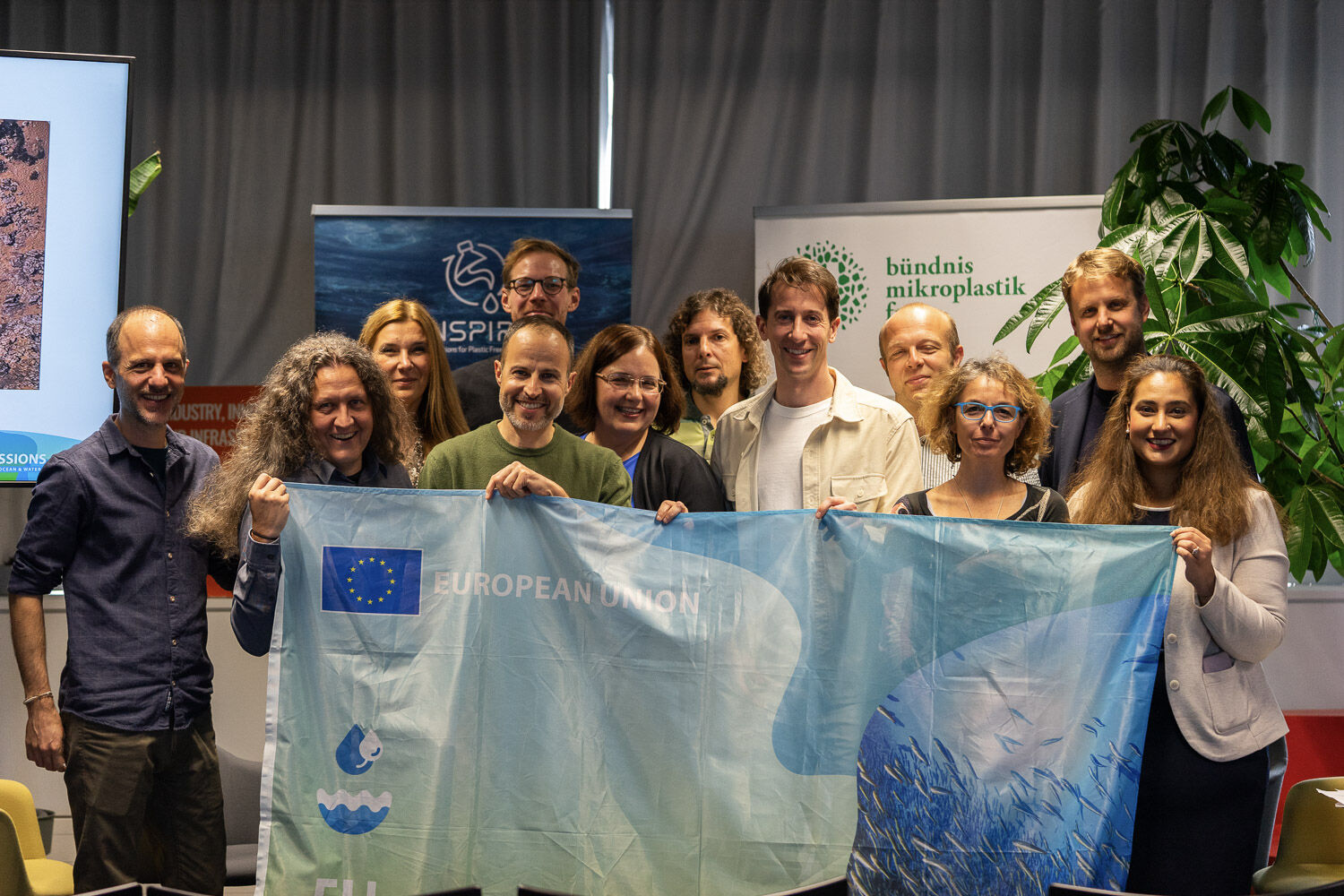
As part of the INSPIRE Blue Economy Series, on October 6th, 2025, alchemia-nova, in collaboration with bündnis mikroplastikfrei, successfully hosted the Innovative Solutions for Plastic Pollution Prevention event. The event in Vienna was designed to connect science and practice, from pioneering materials to real-world policy and market adoption.
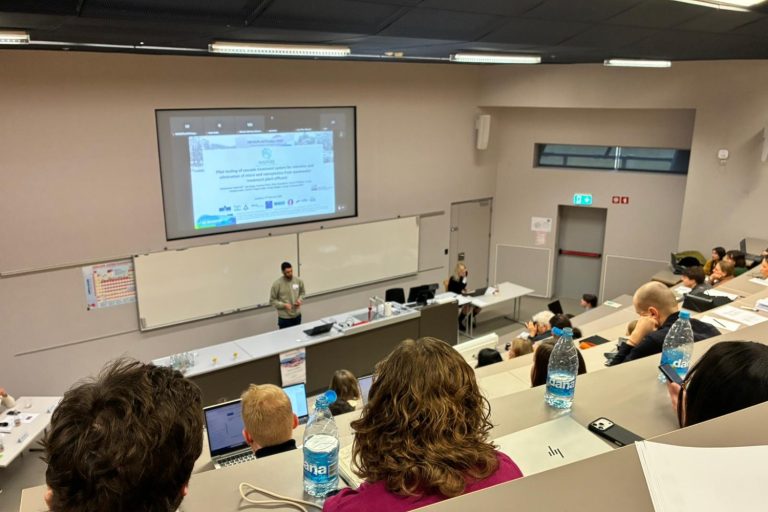
The event kicked off with Panos Petridis (alchemia-nova), who introduced the mission and work of alchemia-nova in advancing circular economy solutions, and Gert Everaert (Flanders Marine Institute – VLIZ), who introduced the INSPIRE Europe Project and outlined the project’s goals and its role in bringing together stakeholders across Europe to address plastic pollution in river ecosystems. Daniel Steinitz (bündnis mikroplastikfrei) emphasized the environmental risks of single-use plastic packaging and the urgent need for biodegradable and packaging-free alternatives.
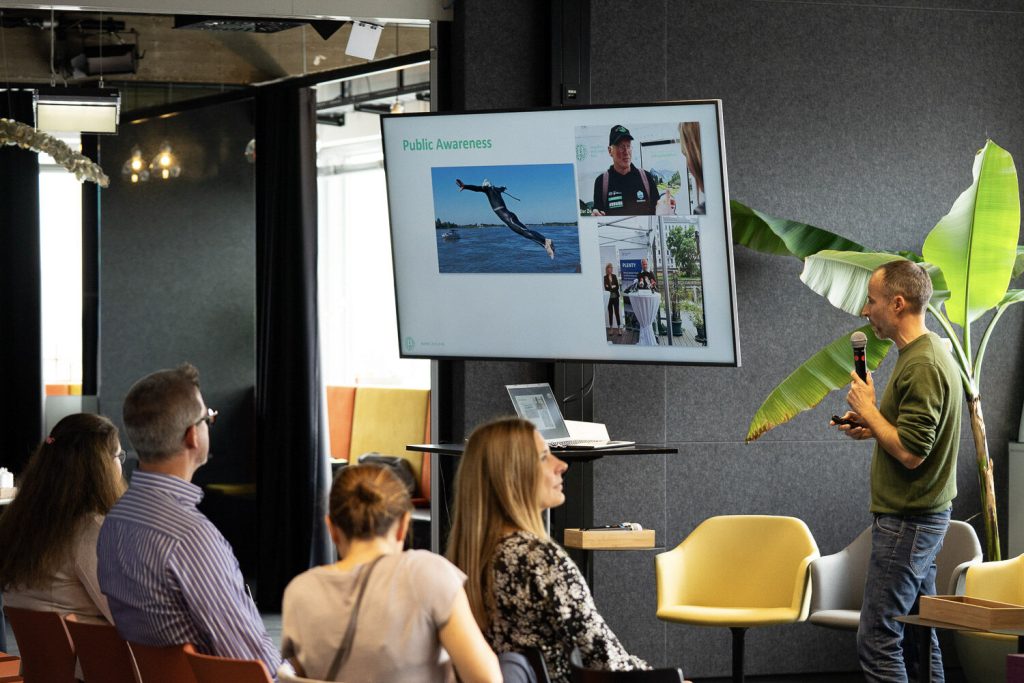
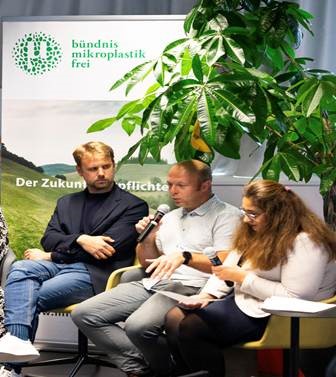
Daniel Steinitz (bündnis mikroplastikfrei) on “Introducing Alternatives to Plastic: Current Status and Future Outlook”
The first session featured a lineup of entrepreneurs and innovators, from INSPIRE and beyond, showcasing their scalable plastic-free waste solutions as alternatives to conventional plastics. These included:
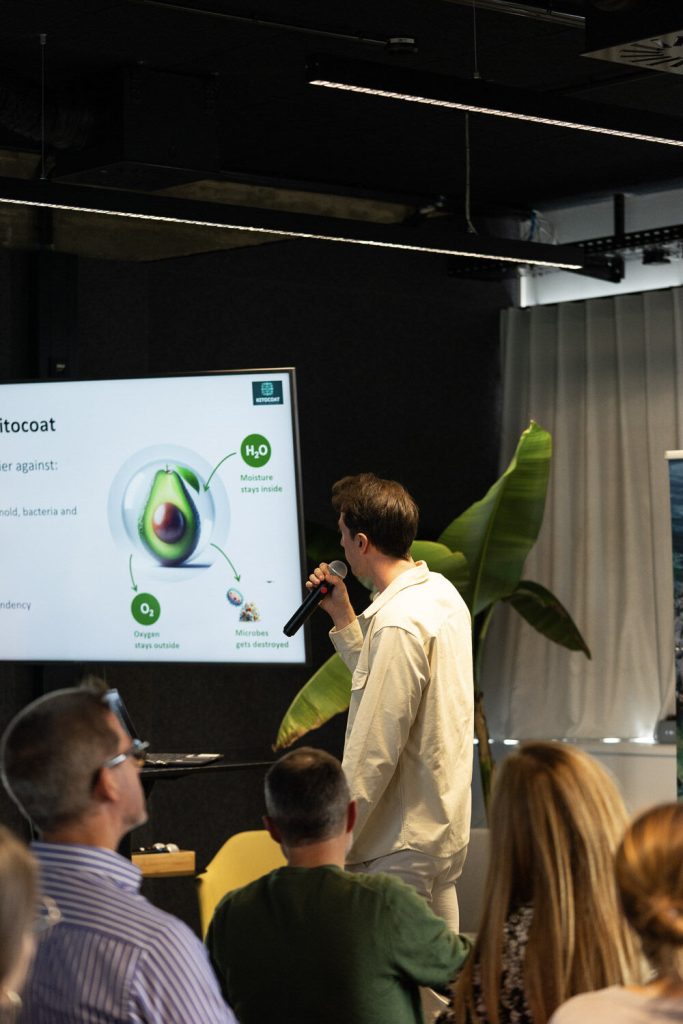
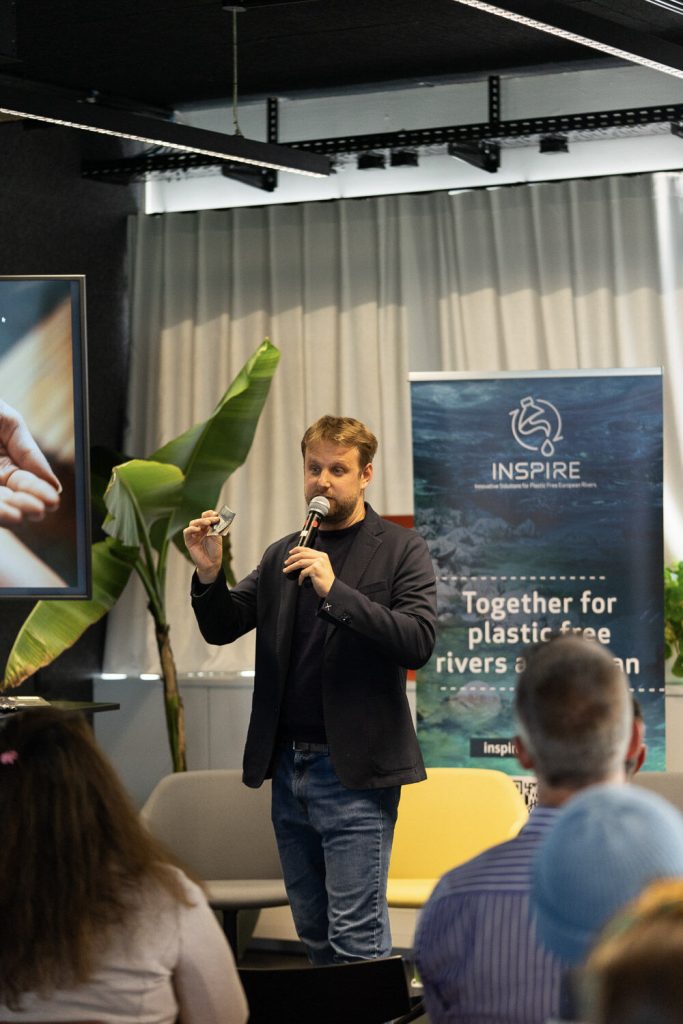
Michael Neuman (KITOCOAT) – presented a chitosan-based nanocoating solution to extend the shelf life of fruits and vegetables (left photo) and Martin Leban (123Zero) – showcased their organic cosmetic products in powder form and plastic-free packaging for the hospitality and events sector (right photo)
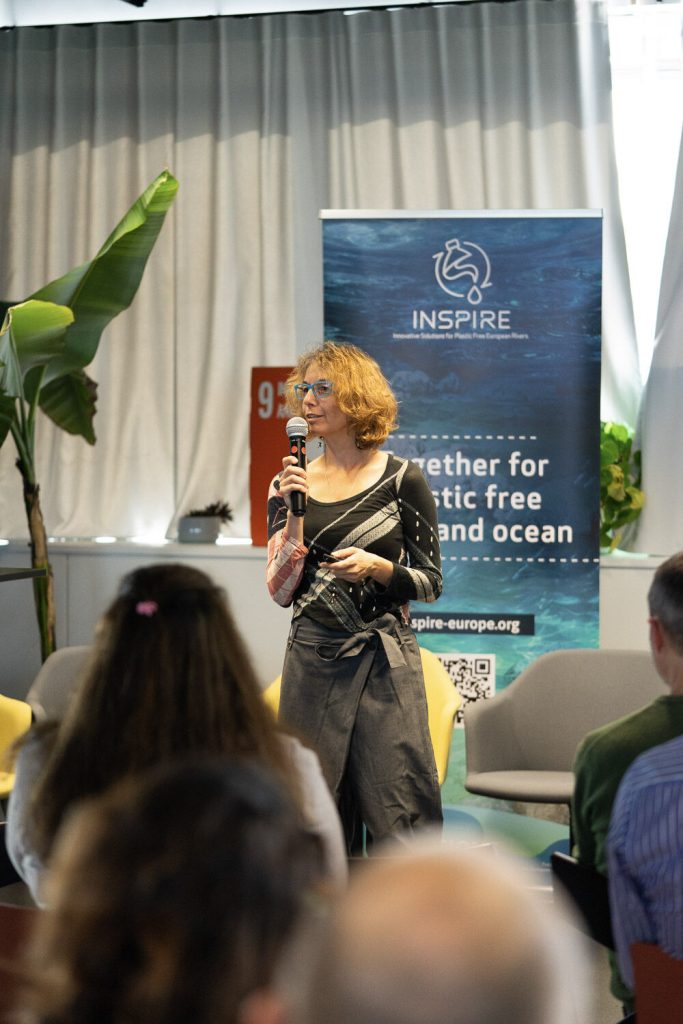
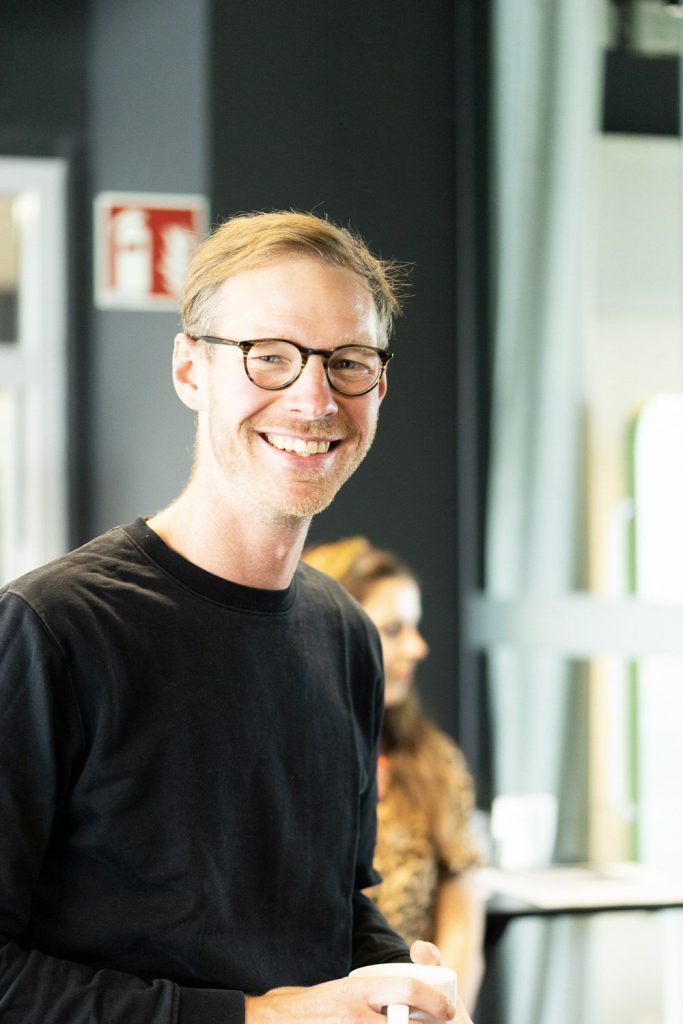
Paul Fuehrmann (chromulus – Trockennebel GmbH) – presented an innovative dry-fog technology to reduce food spoilage and packaging waste (right photo) and Polymnia Dagtzidou-Kisser (alchemia-nova Greece, representing REMEDIES EU) – introduced PLUG AND PLAY 2 ZERO WASTE: Cleaning Infrastructure for Reuse in combination with Bio-based Cups & Mobile Application (left photo)
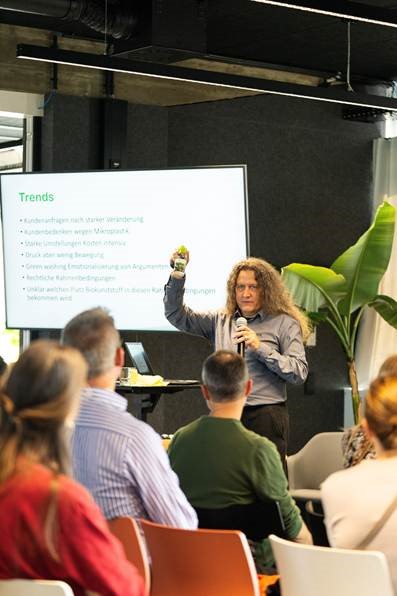
Johann Zimmermann (NaKu) – showcased their series of biobased and biodegradable packaging solutions from renewable raw materials
The second session during the day was a panel discussion – From Innovation to Market moderated by Sarah Gilani (alchemia-nova). The panel explored the challenges of scaling sustainable solutions, including regulatory frameworks, market readiness, and consumer engagement.
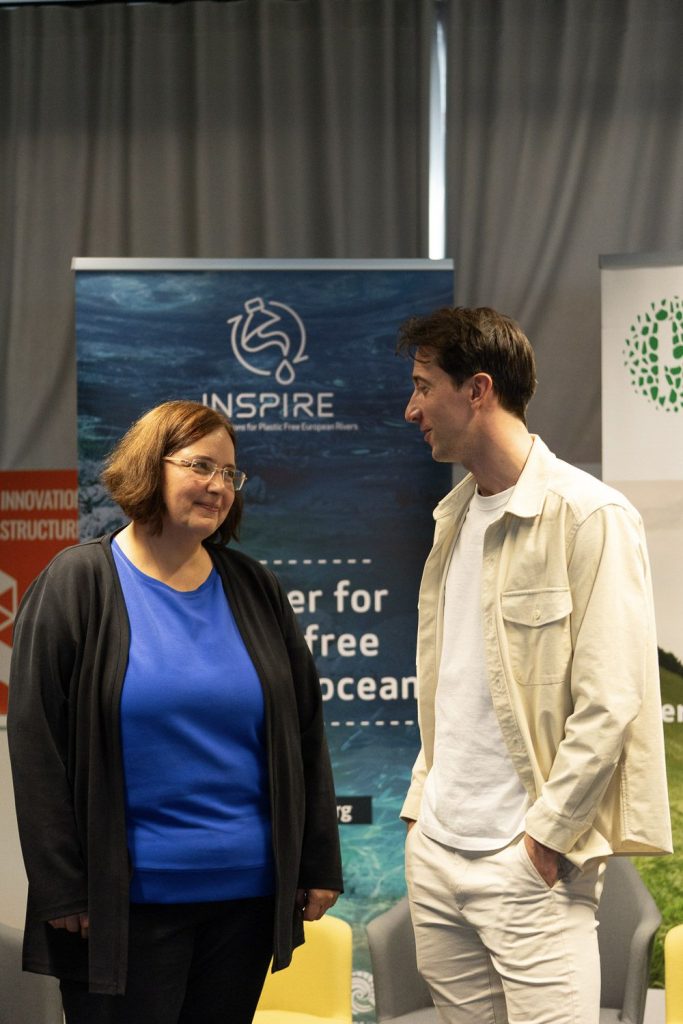
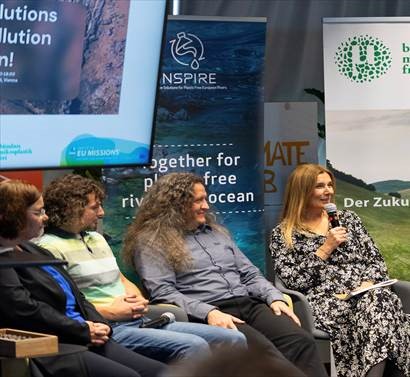
The panelists: (above) Renate Paumann (BMLUK), (below, from left to right): Andreas Mautner (University of Natural Resources and Life Sciences, Vienna – BOKU) ; Johann Zimmermann (NaKu) ; Milica Aksentic (Senior Sustainability Manager, Mondi Group) ; Martin Leban (123zero) ; Gert Everaert (Flanders Marine Institute – VLIZ) ; Sarah Gilani (alchemia-nova)
The panelists brought together perspectives from research, policy, industry, and start-ups, creating a rich dialogue on how to accelerate the transition from innovation to real-world impact.
From Research to Reality:
Andreas Mautner (BOKU) emphasized that beyond cost, the biggest challenge in scaling bio-based materials lies in ensuring supply chain stability and material durability. Bio-based polymers differ chemically from fossil-based plastics, meaning existing processing systems cannot simply “swap” materials. Adapting equipment, infrastructure, and processes requires significant time and investment—key hurdles to industrial adoption.
Policy and Governance for Change:
Renate Paumann (BMLUK) shared insights from Austria’s 2022-2025 Action Plan against Microplastics, which includes 25 major measures to be implemented by 2025. She highlighted the importance of cross-sector collaboration—regulators, industry, and academia—given the complexity of microplastic sources ranging from detergents and cosmetics to tire abrasion and waste mismanagement. The plan defines clear responsibilities and aims for practical, achievable measures at national, European, and even global levels, with Austria actively engaged in shaping the forthcoming global plastic treaty.
Industry Perspective on Material Choice:
Representing the packaging industry, Milica Aksentic (Mondi Group) described Mondi’s philosophy: “paper where possible, plastic when needed.” The company adopts a material-agnostic approach, selecting the right solution based on application needs. While paper is preferred, plastics remain essential for certain food, medical, and industrial applications. Mondi prioritizes recyclability and adherence to CEFLEX recyclability guidelines. Aksentic noted that unclear regulatory frameworks and fragmented standards pose challenges for adopting new materials. In this context, EU’s plan to ban certain single-use plastic packaging and commitment that all plastics are recyclable by 2030 would be a game changer. Ultimately, customers’ expectations are simple: packaging must work as well as it protects the environment.
Pioneering Bioplastics:
Johann Zimmermann (NaKu) reflected on his company’s pioneering journey in bio-based plastics. He identified price as the main barrier preventing customers from switching to compostable alternatives—if costs were equal, demand would soar. Zimmermann advocated for a system where producers of microplastic pollution bear responsibility for remediation costs, making sustainable solutions more competitive. He also called for clearer regulations and standardized labeling to simplify the validation of compostable materials.
Scaling Holistic Solutions:
From the perspective of the INSPIRE project, Gert Everaert (VLIZ) shared his experiences from coordinating several partners and pilots across Europe’s diverse river systems. While collaboration with local environmental agencies has proven successful in some regions, conflicting national regulations can delay implementation. Simplified approval processes for short-term pilots could help scale innovations faster. Everaert stressed the need for regulatory alignment and flexible frameworks to enable broader, long-term adoption of effective technologies.
Start-up Realities:
Martin Leban (123zero) provided the start-up perspective, highlighting the challenge of scaling production and finding early adopters. Initially, the company pursued a highly technical, lab-based innovation approach, but as demand grew, they had to simplify processes to achieve scalability. Regulatory barriers were less pressing than market realities—making sustainable products appealing and competitively priced was key. In the cosmetics sector, he noted, success depends not only on performance but also on emotional connection and brand positioning.
Together, the panel underscored that innovation alone is not enough: collaboration, regulatory clarity, and systems thinking are crucial to bridge the gap between lab-scale solutions and market adoption.
The event reaffirmed the importance of innovation, collaboration, and systemic thinking in building a future free from plastic pollution. Let’s continue building momentum toward a circular, plastic-free future!
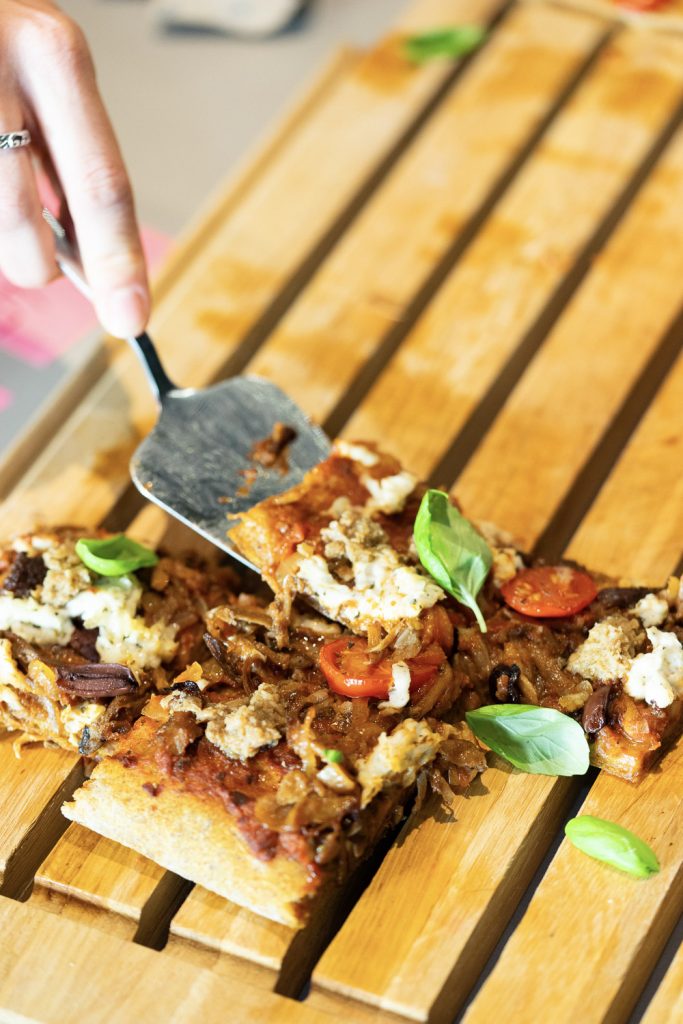
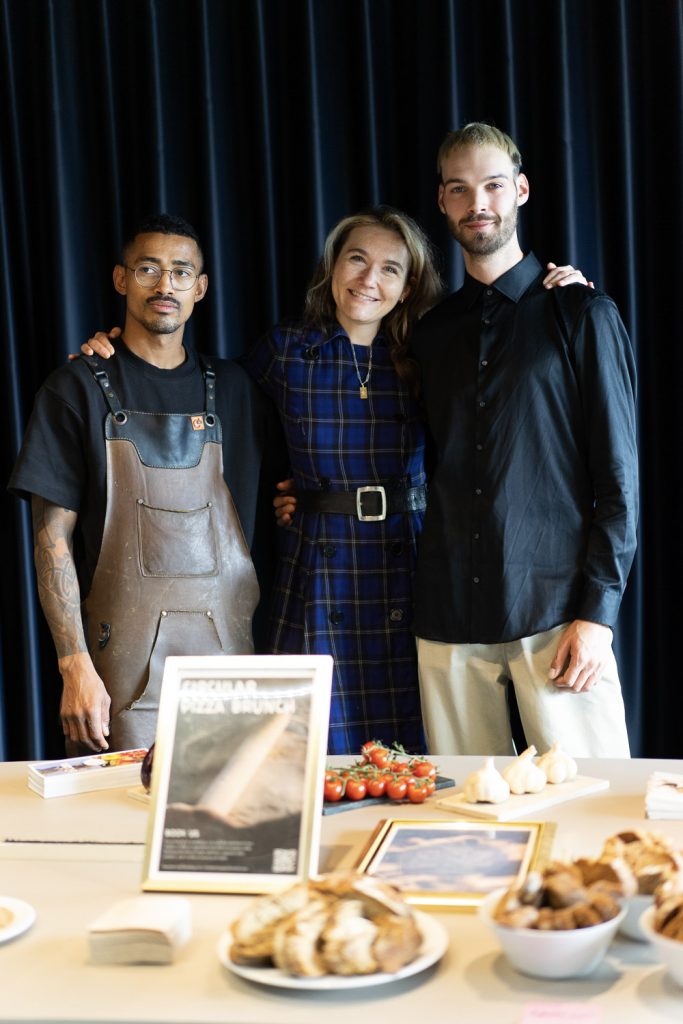
The event concluded with a networking reception featuring circular pizza from Christine’s Pizza Brunch—a delicious and sustainable culinary experience that reflected the event’s ethos. By using surplus and leftover regional ingredients, the catering beautifully demonstrated how food waste can be reduced while creating real value.