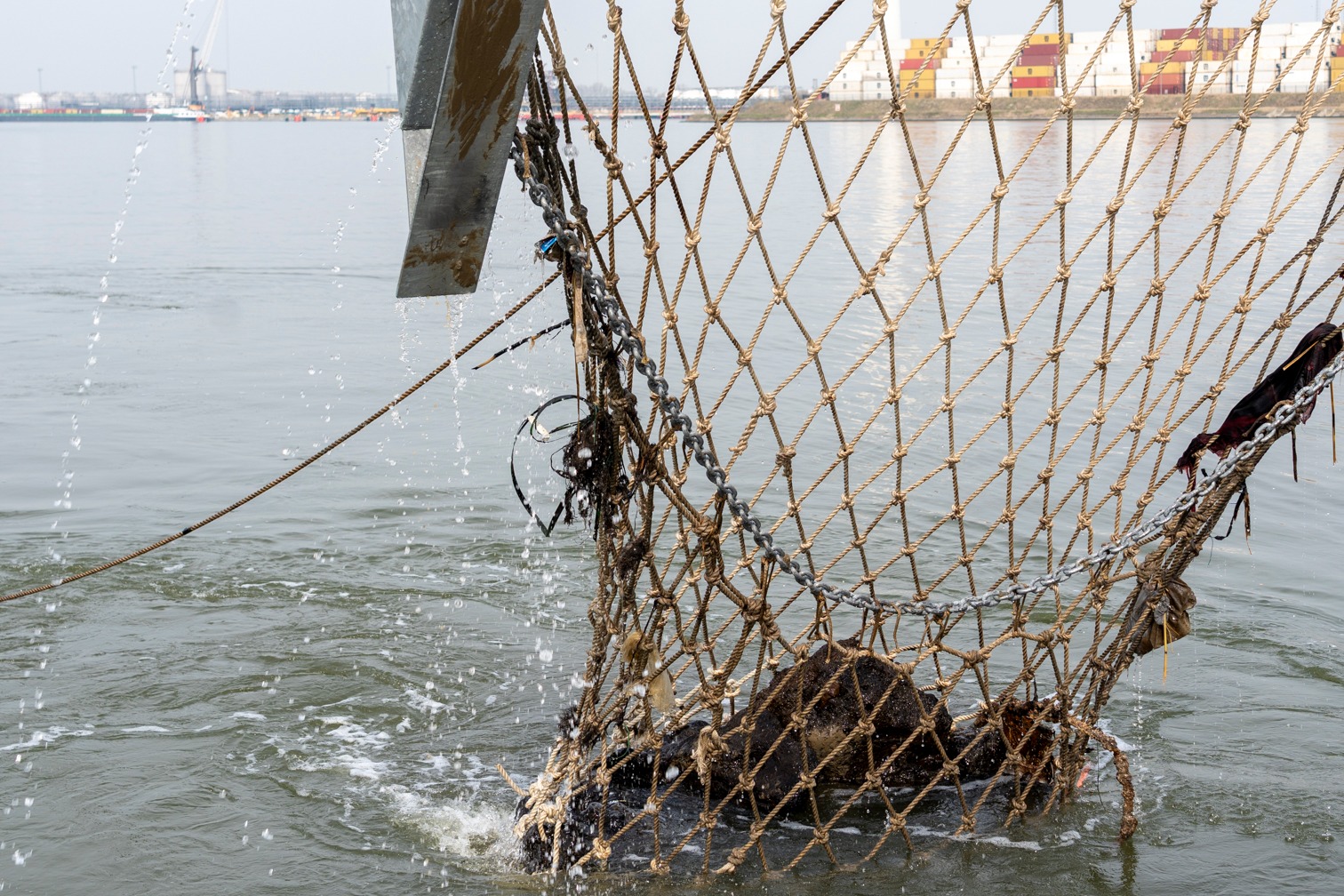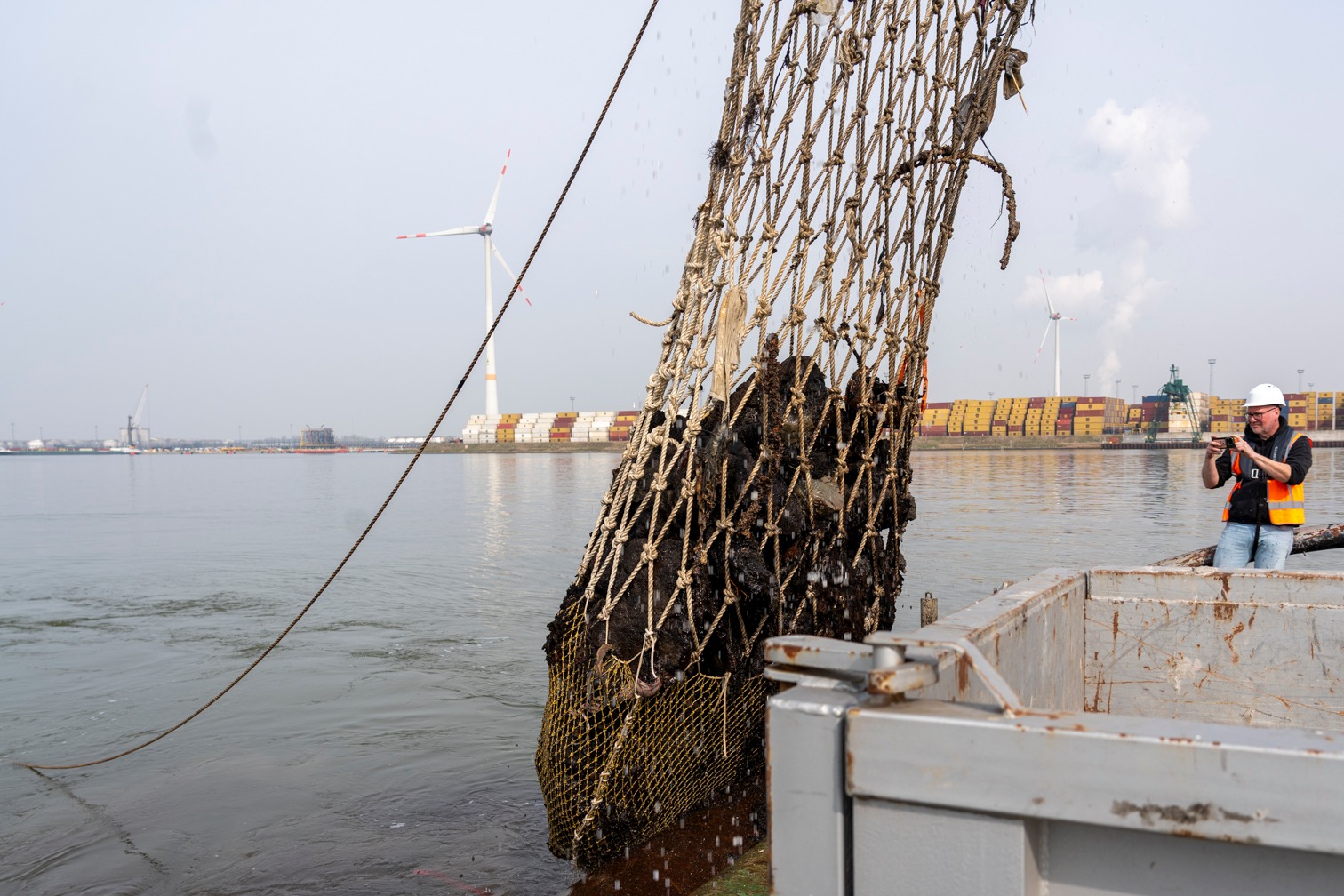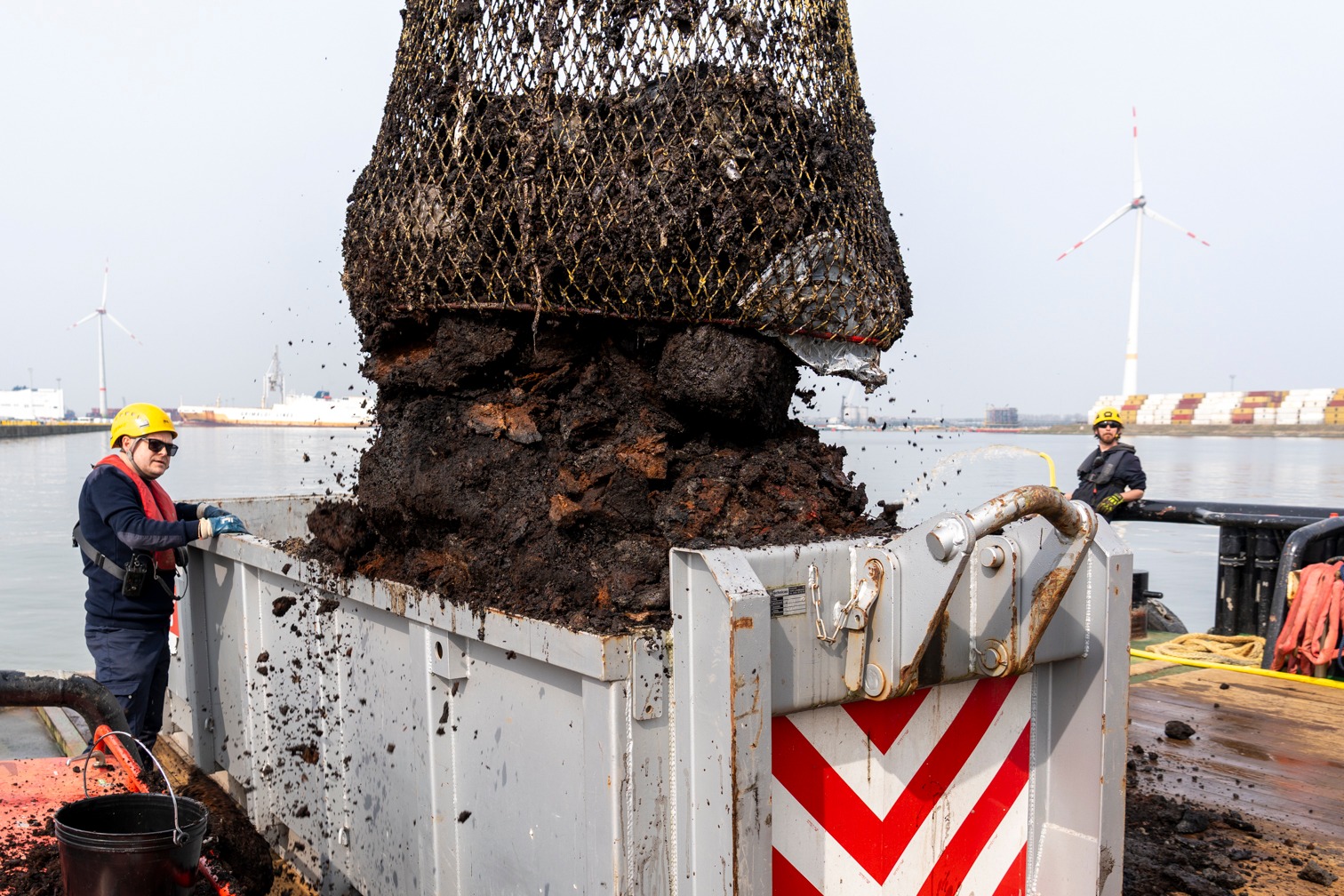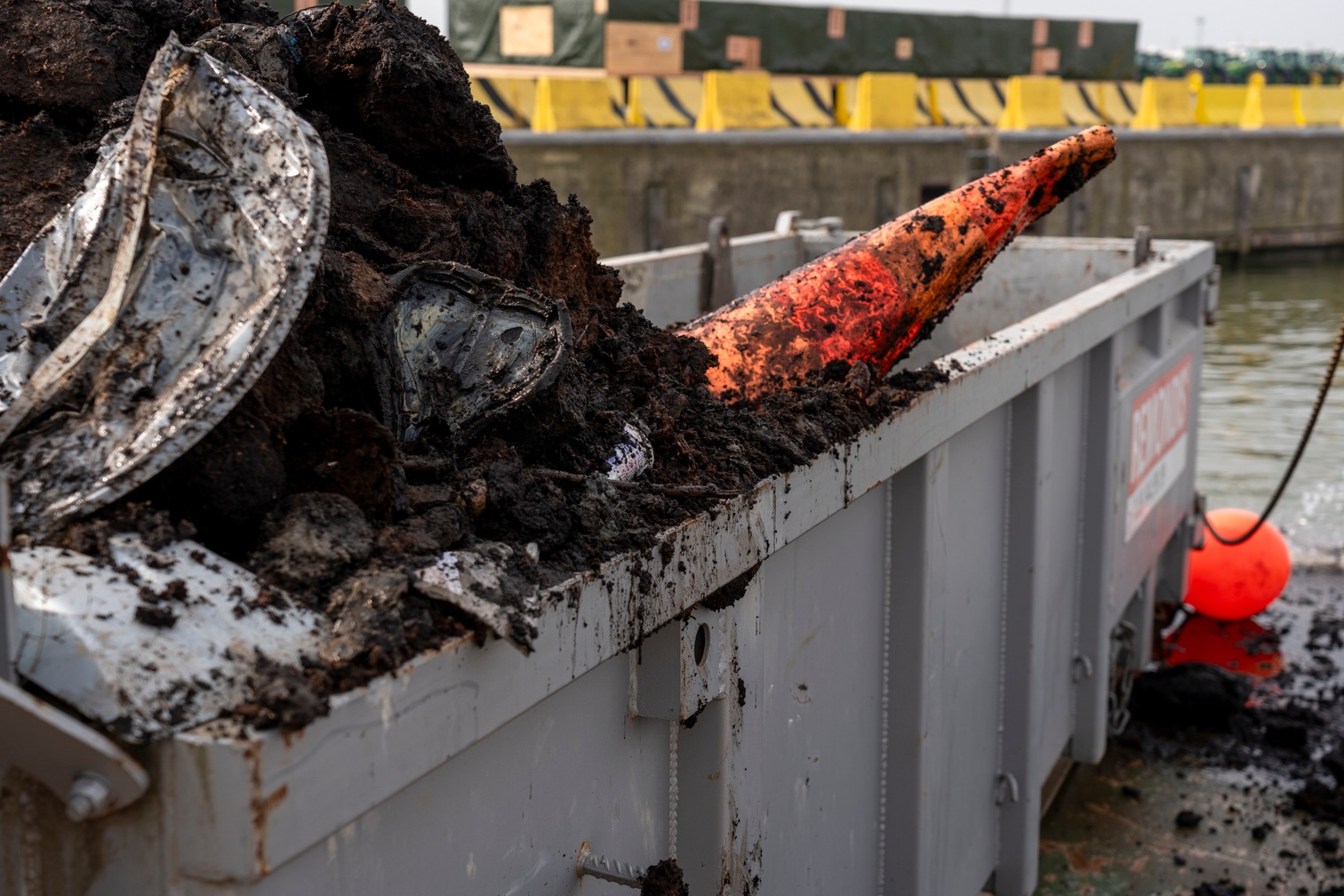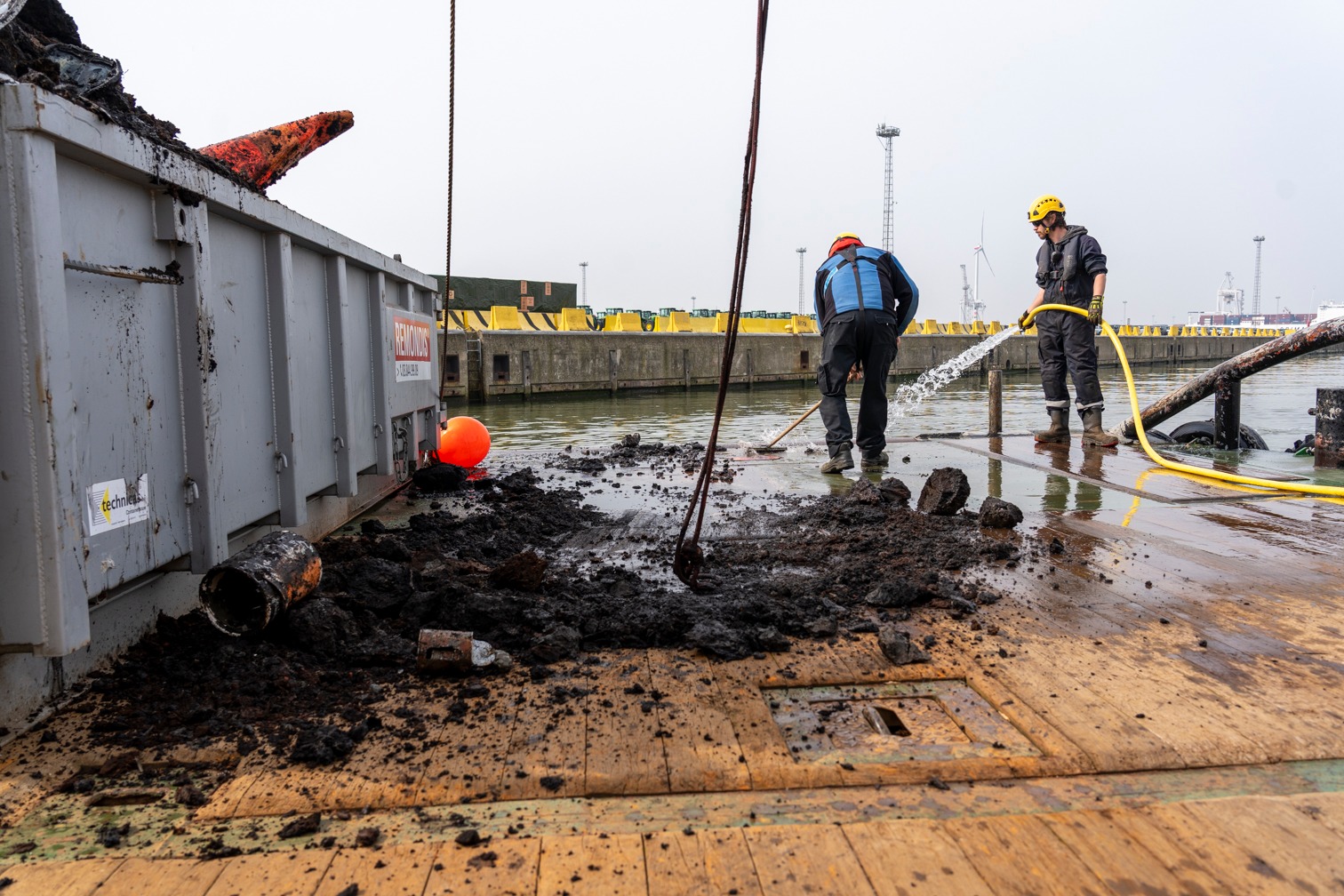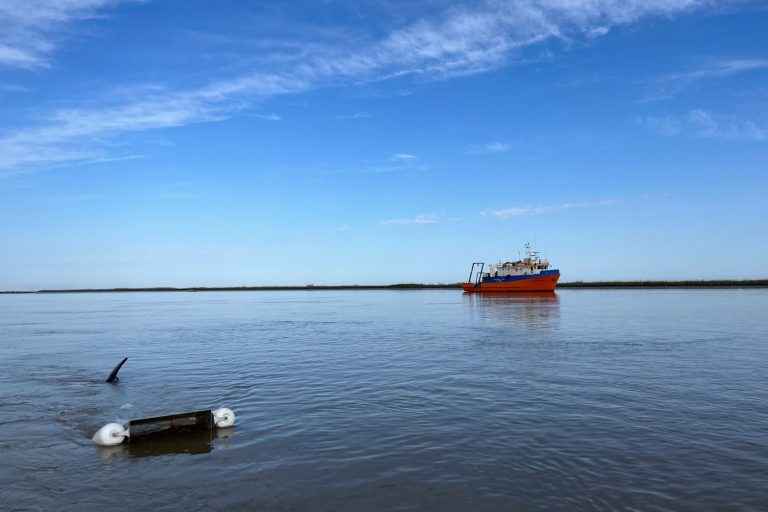
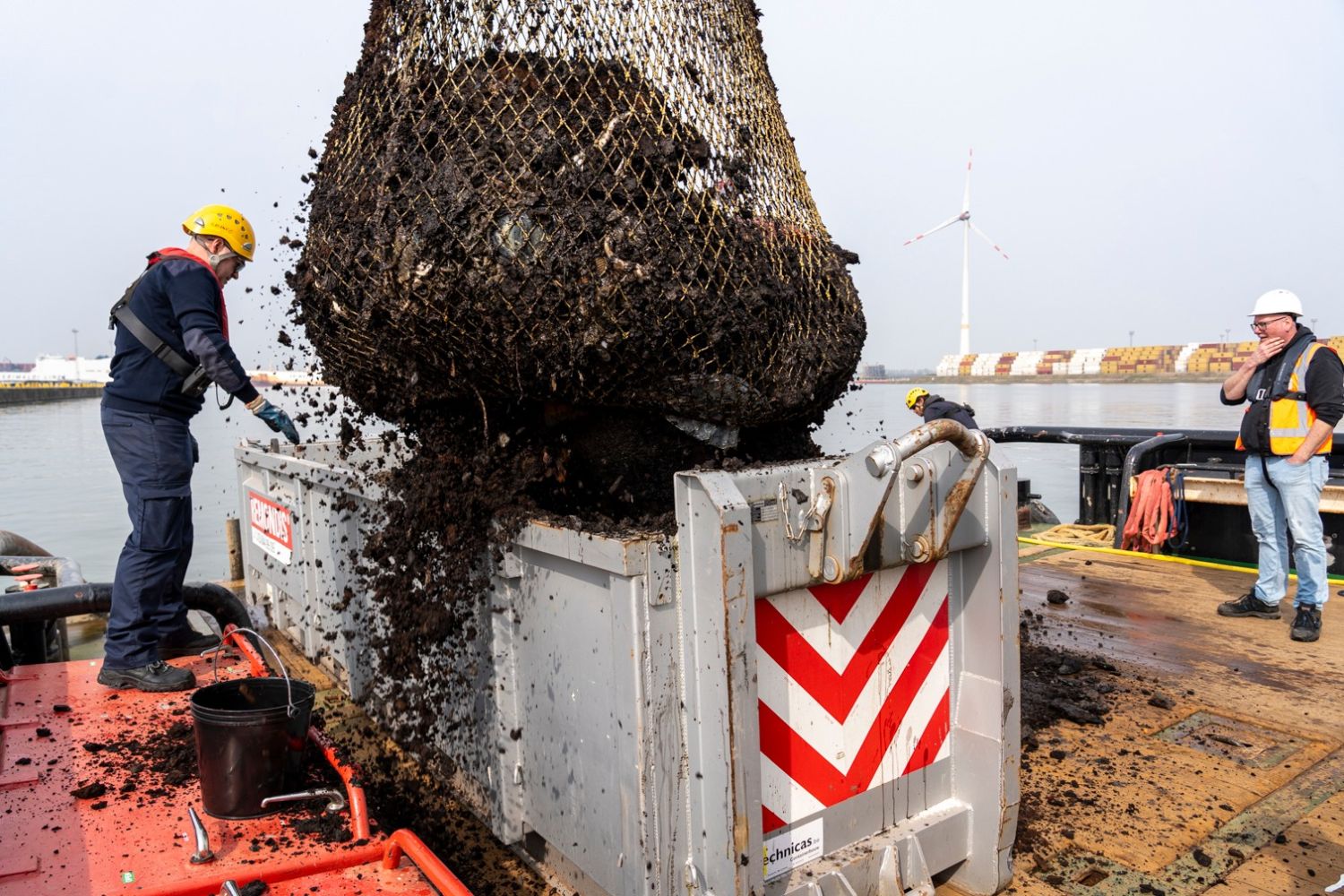
Antwerp, 23 March 2026 – A groundbreaking field test in the Doeldok at the Port of Antwerp has successfully demonstrated a new method for removing plastic waste from the riverbed. The test was carried out as part of the European INSPIRE project by FishFlow Innovations, in collaboration with VLIZ, Wageningen University & Research (WUR), Port of Antwerp and MOW Vlaanderen. During the operation, a specially designed bottom net was towed over a short section of the dock floor, collecting macroplastics and other debris.
Unlike conventional dredging or trawling methods, the innovative net is engineered to minimise ecological impact. Its design is meant to allow fish and other aquatic organisms to avoid capture, while effectively lifting heavier waste materials from the sediment. Plastic on the riverbed is often invisible but poses a long-term threat to ecosystems. This successful test shows that we can remove submerged waste in a targeted and responsible way.
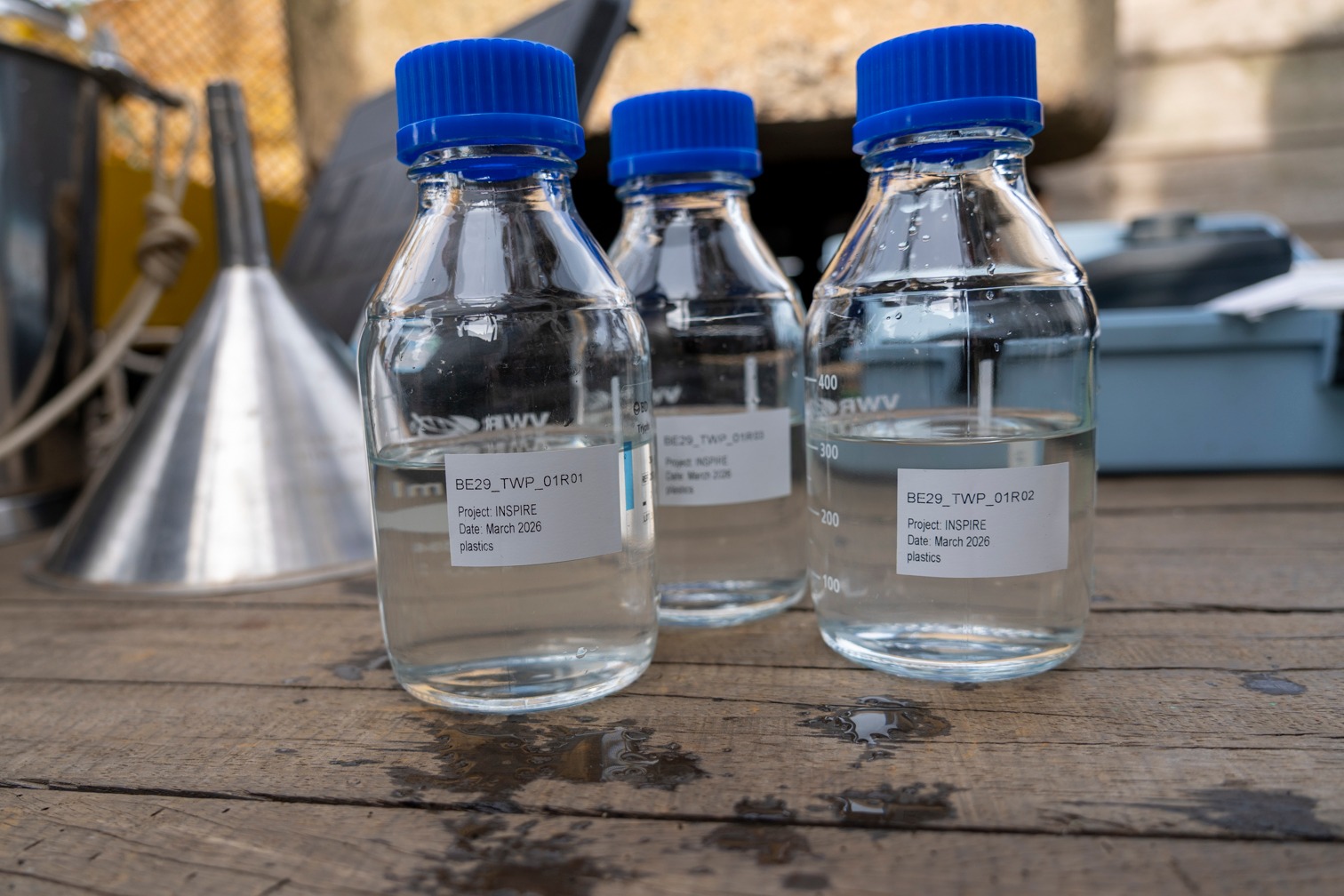
The operation in the Doeldok proceeded smoothly, with the net capturing a significant amount of plastic and debris, during this process water samples were taken and no significant differences were noted before, during and after the pull with the net. The collected data and findings will now be analysed to further refine the technology in efficiency and fish friendliness. Insights from the test will contribute to optimising the system for a broader deployment in rivers and harbour environments across Europe.
The INSPIRE project, funded under the Horizon Europe programme, aims to develop scalable solutions to reduce plastic pollution in European waterways. This successful trial marks an important step toward tackling one of the less visible but persistent forms of environmental pollution: plastic accumulating on the riverbed.