The INSPIRE project was represented at the BelTox-BEMS Annual Scientific Meeting in Brussels, 4th December 2025, themed “Unmasking Microplastics: Impacts, Challenges and Implications for (Eco)Toxicology”. The annual BelTox-BEMS meeting brought together toxicologists, ecotoxicologists, environmental scientists, and policy-related stakeholders to discuss emerging challenges and scientific progress in the field.
During this year’s event, participants received an introduction to the field of microplastics, including general concepts and current knowledge gaps. It explored microplastics’ occurrence, fate, ecological and health impacts across different environments — including agricultural soils, water, and living organisms.
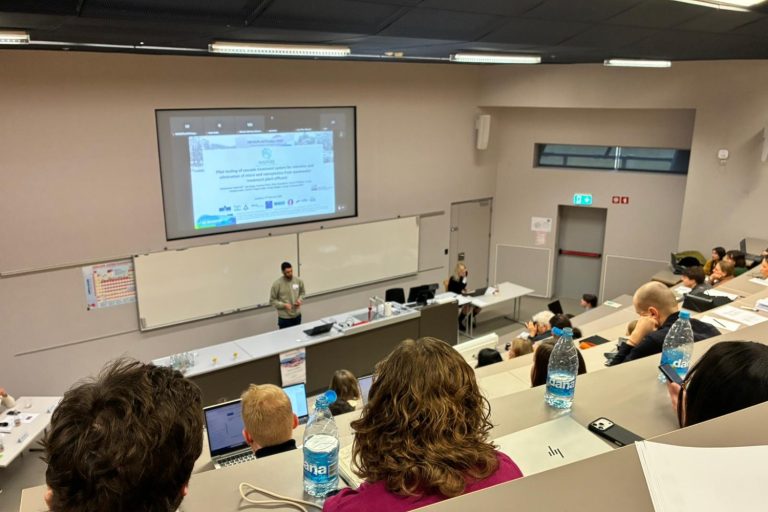
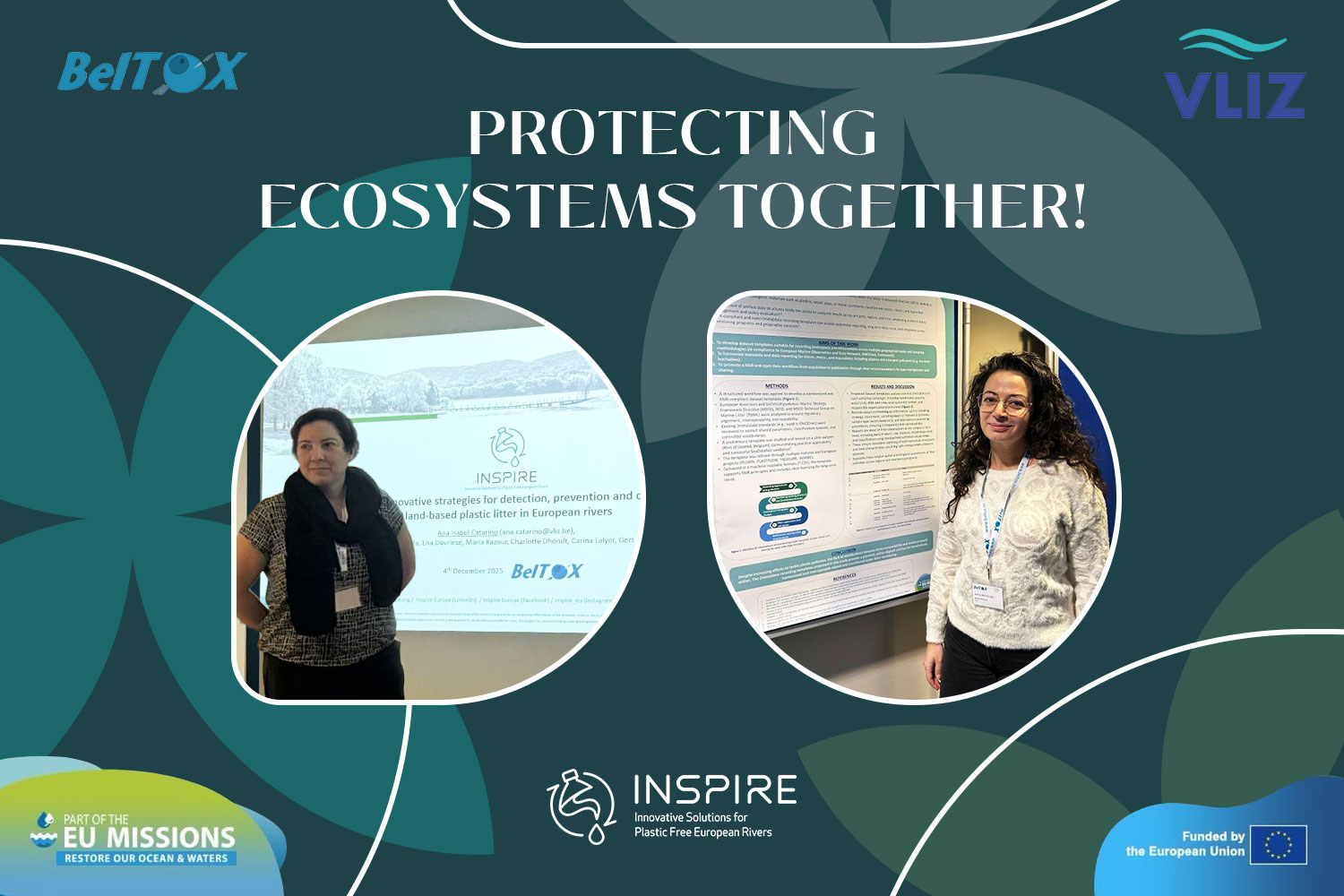
The INSPIRE project was actively represented through two scientific contributions from the coordination team at VLIZ. Ana Catarino delivered an oral presentation during the meeting, showcasing INSPIRE’s aims and innovative solutions around macro and microplastics. “Showcasing our findings at the annual meeting is a major milestone for the project,” Dr Catarino noted. She continues: “As we pioneer solutions to mitigate (micro)plastic exposure, it is vital to ensure our approach is not just innovative, but that it makes a tangible difference.”
Maria Kazour presented a poster, offering insights from the ongoing research, underscoring INSPIRE’s engagement with microplastics science and toxicology, and best practices on data reporting. Dr Kazour mentioned “These contributions highlight how INSPIRE not only addresses plastic pollution through mitigation and awareness but also engages with the broader scientific community on detection, ecotoxicology, and risk assessment.”
By contributing to this forum, INSPIRE connects its mission with pressing environmental and health research questions, aligning project objectives with emerging challenges, and fostering collaboration with major experts in the microplastics community.
What We Achieved:
- Raised visibility of INSPIRE within the microplastics community.
- Shared preliminary data, approaches and concepts that link INSPIRE to broader microplastic research efforts.
- Strengthened networks with researchers, toxicologists, and environmental scientists — paving the way for future collaboration or integration of INSPIRE outputs into risk-assessment frameworks.