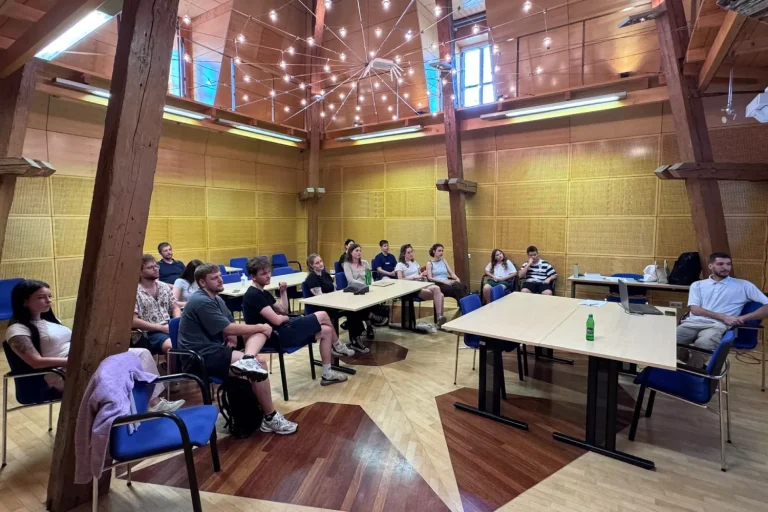
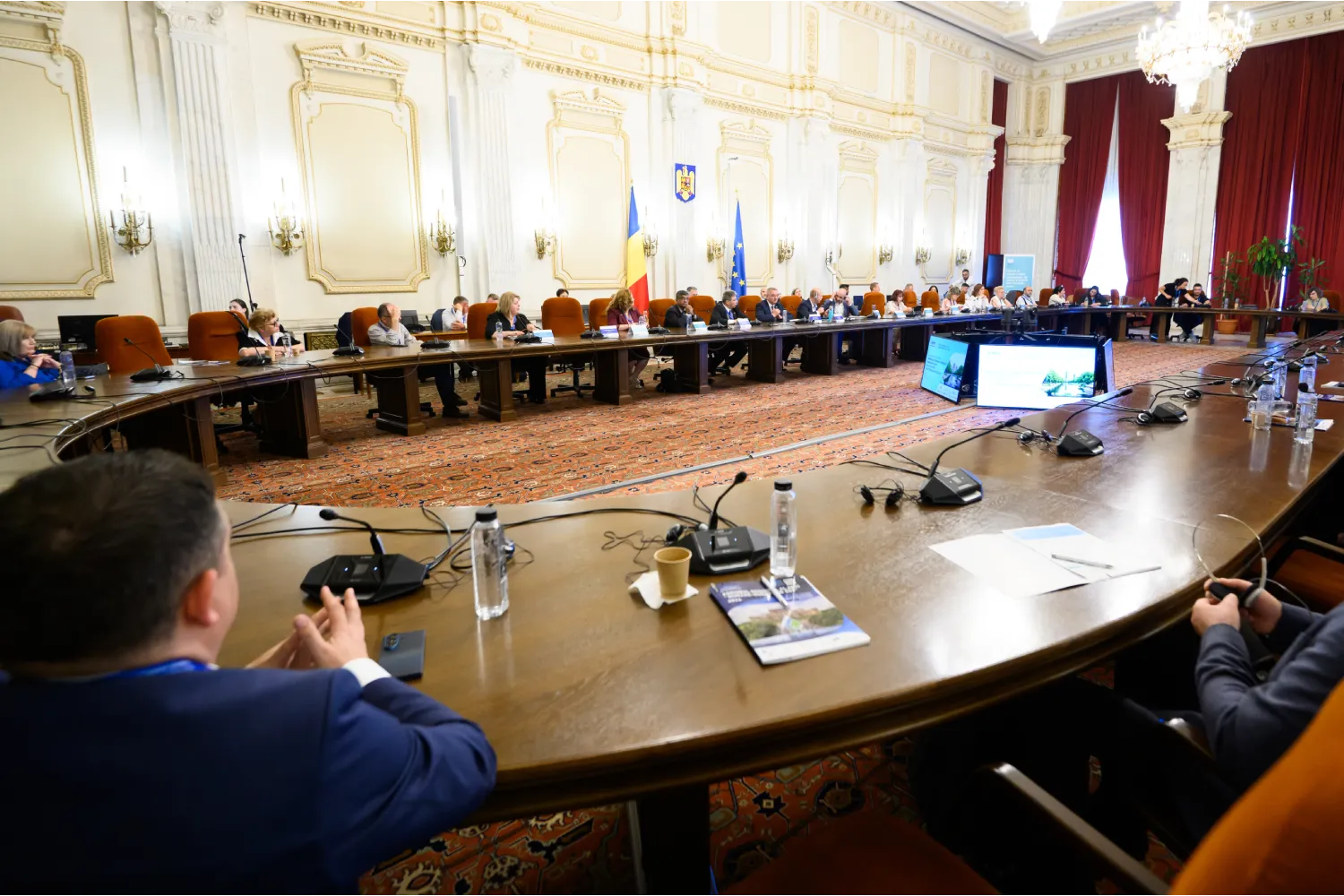
As part of the Regional Water Forum “Danube – Eastern Europe” 2026, held in Bucharest, the international INSPIRE Blue Economy Conference – Tested Technologies. Applied Solutions. Policies for the Future of Water brought together representatives of the water sector, academia, public institutions, industry and the European INSPIRE Consortium in an applied dialogue on the future of water and wastewater services.
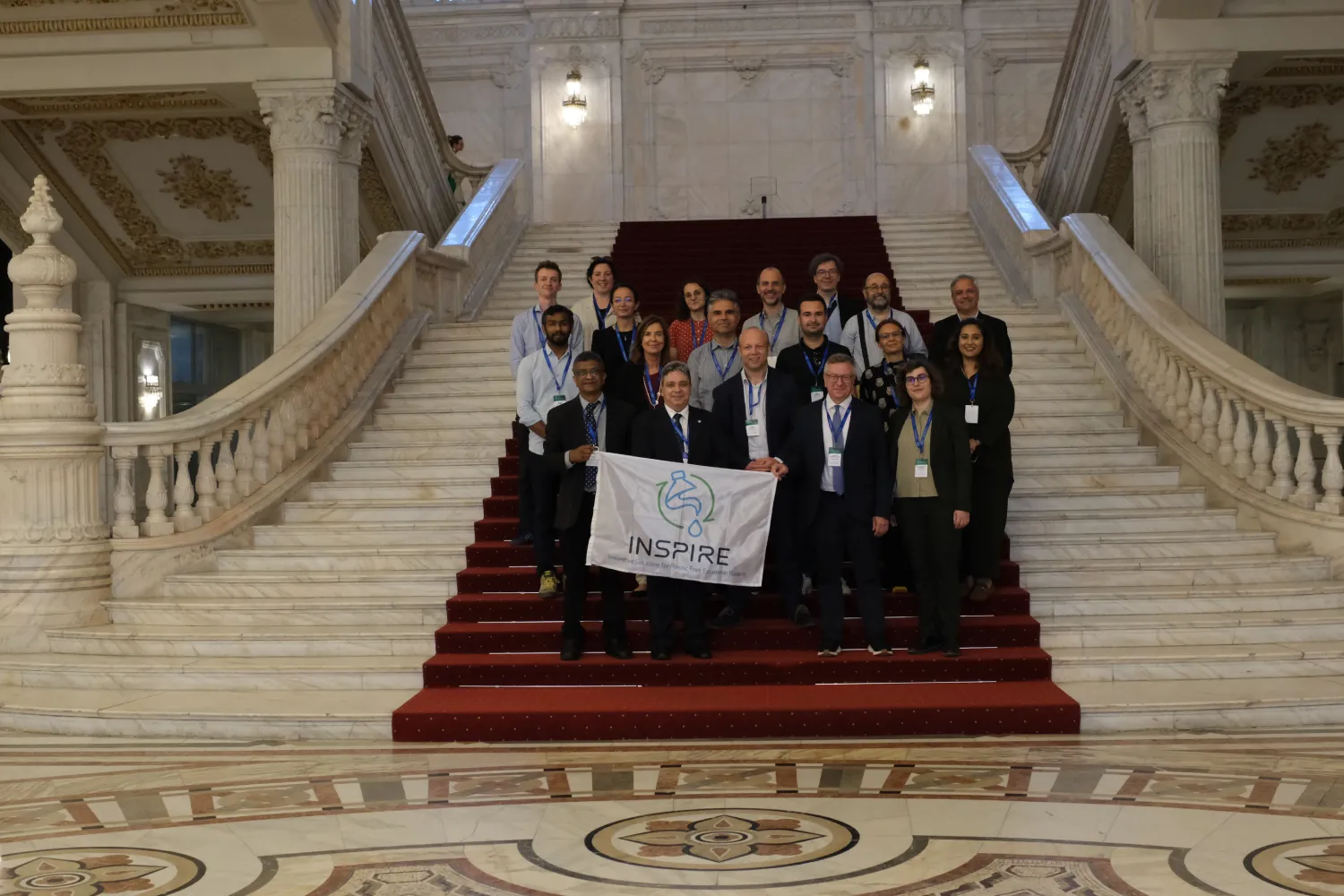
The event took place at the Palace of Parliament – Senate of Romania and gathered approximately 110 participants, including 32 representatives of the INSPIRE Consortium from European Union Member States. They were joined by regional water and wastewater operators, researchers, public authorities, universities, industry representatives, and organizations involved in the development of European water and environmental policies.
The conference was structured around three main directions: tested technologies, applied solutions and policies for the future of water. This format allowed the results of European research to be connected with the practical needs of water and wastewater operators, as well as with the regulatory developments that will influence the sector in the coming years.
– The first direction, dedicated to tested technologies, focused on presenting solutions developed, tested or validated within the INSPIRE project and other relevant European initiatives. Particular attention was given to technologies aimed at reducing pollution, monitoring, retaining or removing microplastics, nanoplastics, and particles generated by tyre wear. In this context, solutions tested in Romania were presented and discussed.The second direction, dedicated to applied solutions, addressed how research, functional materials, nanomaterials and advanced technologies can be transformed into practical solutions for water and wastewater operators. The discussions focused on operational integration, technical robustness, maintenance requirements, compatibility with existing infrastructure, scalability and technology transfer towards operators.
– The third direction, dedicated to policies for the future of water, connected the technologies and solutions presented with European public policy developments and with the requirements that will shape the water and wastewater sector in the years ahead. Topics included the Water Framework Directive, the Urban Wastewater Treatment Directive, emerging pollutants, PFAS, microplastics, pharmaceutical residues, investment financing and the technical, institutional and financial capacity needed for implementation.
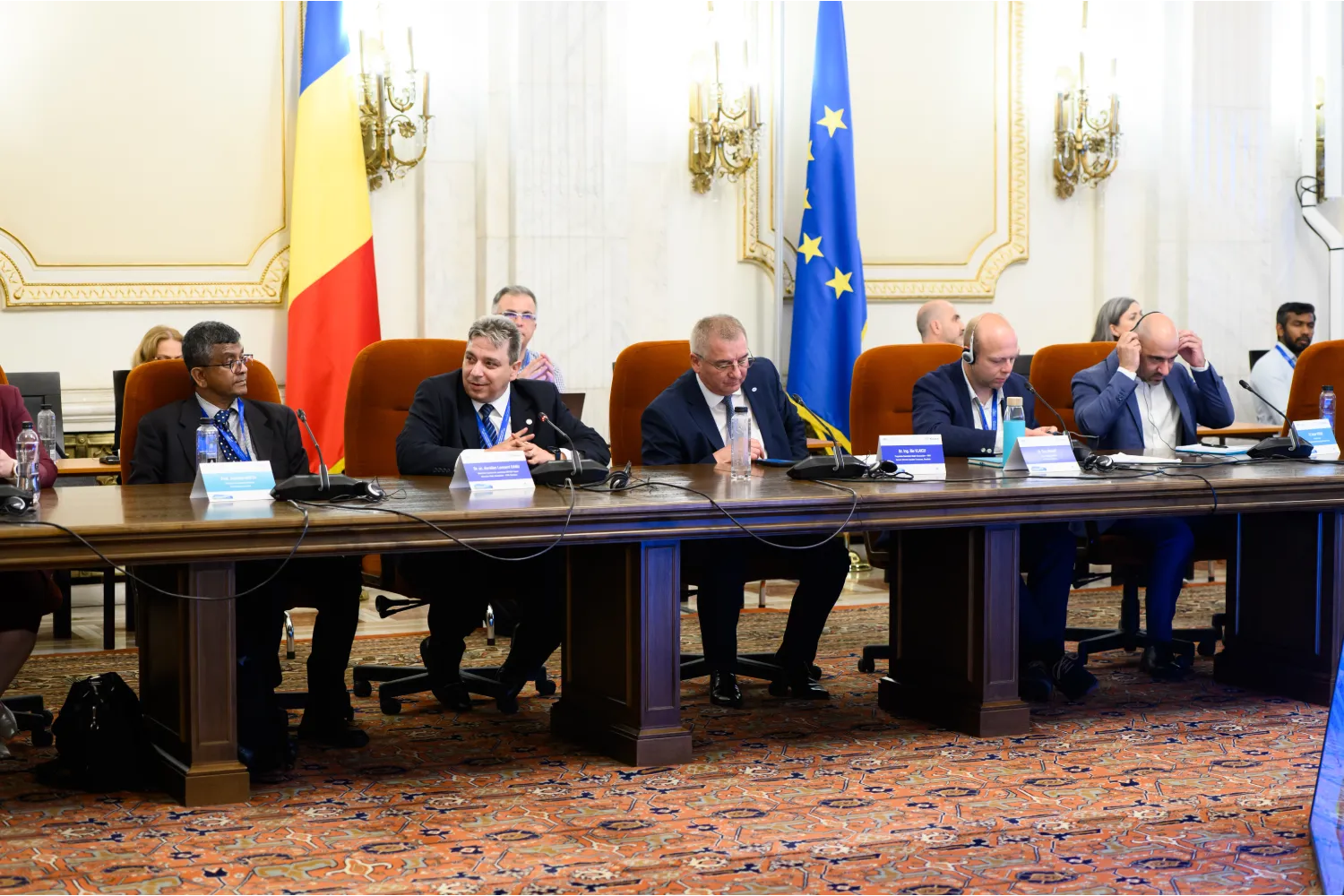
The conference programme included presentations and panel discussions with international experts and representatives of public institutions, operators, industry and academia. Dr. Gert Everaert (VLIZ, Belgium) and INSPIRE Project Coordinator, presented the project architecture, objectives, tested technologies and results. Dr. George Triantaphyllidis (MINDS / HCMR, Athens) contributed to the discussions on tested technologies, Horizon projects, technology validation and transfer to the water sector. Prof. Joydeep Dutta (KTH Royal Institute of Technology, Stockholm) addressed the transformation of research and advanced technologies into practical water solutions. Dr. Oscar Prado (AERIS , Barcelona) connected the technologies discussed with European public policy directions and with the relevance of INSPIRE for the future of the sector.
The panels also included contributions from representatives of relevant national authorities and institutions, such as Gheorghe Constantin – Ministry of Environment, Waters and Forests, Elena Țuchiu – National Administration “Romanian Waters”, Anca Cador – National Regulatory Authority for Community Public Utility Services, as well as representatives of the pharmaceutical sector / APMGR, through Simona Cocoș.
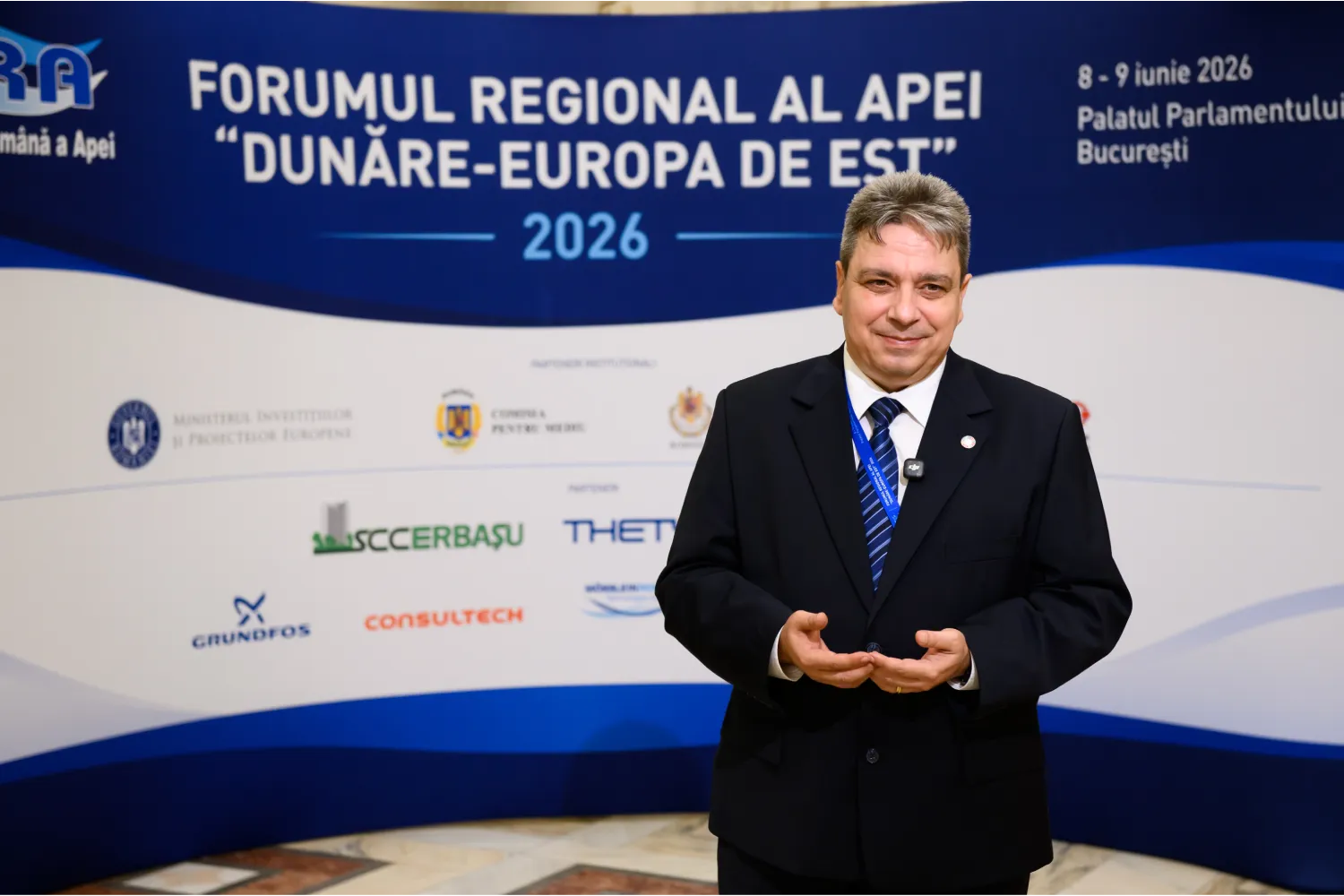
In his opening remarks, Dr. Eng. Ilie Vlaicu, President of the Romanian Water Association, underlined the importance of European cooperation in developing and implementing innovative solutions for the protection of water resources. He emphasized that the water sector can no longer remain limited to a logic of minimum compliance or punctual intervention, but needs vision, implementation capacity, validated technology and cooperation among all relevant stakeholders.
The President of ARA also highlighted the role of the INSPIRE project – Innovative Solutions for Plastic Free European Rivers – in connecting advanced research with the operational reality of water and wastewater infrastructure. In this respect, the conference was not only a dissemination exercise, but also a platform for applied dialogue between researchers, water and wastewater operators, public institutions, universities, technology partners and industry representatives.
An important element of the event was the participation of regional water and wastewater operators from Romania. They brought into the discussion the practical perspective of existing infrastructure, costs, technical limitations, compliance requirements, investment pressure and the need for robust, scalable and operational solutions that can function under real conditions.
The conference helped clarify which technologies have already been tested or are currently being validated, which types of pollutants can be addressed as a priority, what conditions are needed to integrate solutions into existing infrastructure, which technical, financial and institutional barriers must be overcome and how public policies and European funding can support the adoption of innovative solutions.
Through this format, the INSPIRE Blue Economy Conference strengthened a concrete dialogue between research, operators, public institutions and industry, ensuring that innovation does not remain only at project or laboratory level, but can be understood, tested, adapted and integrated into real infrastructure.
The event demonstrated that the protection of water resources, pollution reduction, treatment of emerging pollutants, circular economy, operational efficiency, long-term resilience, biodiversity protection and human health must be addressed in an integrated manner. In this sense, the INSPIRE Blue Economy Conference acted as a bridge between European research and the operational future of water and wastewater services.
The conference also confirmed the role of the Romanian Water Association as a professional dialogue platform for the sector, able to connect operators, public institutions, academia, technology partners and European projects around a common agenda for the future of water.